How is AI changing your job?
Here's the truth most people miss: AI isn't replacing job titles, it's transforming the tasks you do every day. Your role as a marketing manager, accountant, or software engineer might stay the same, but what you spend your time on is shifting dramatically. Understanding this difference is crucial to staying ahead.
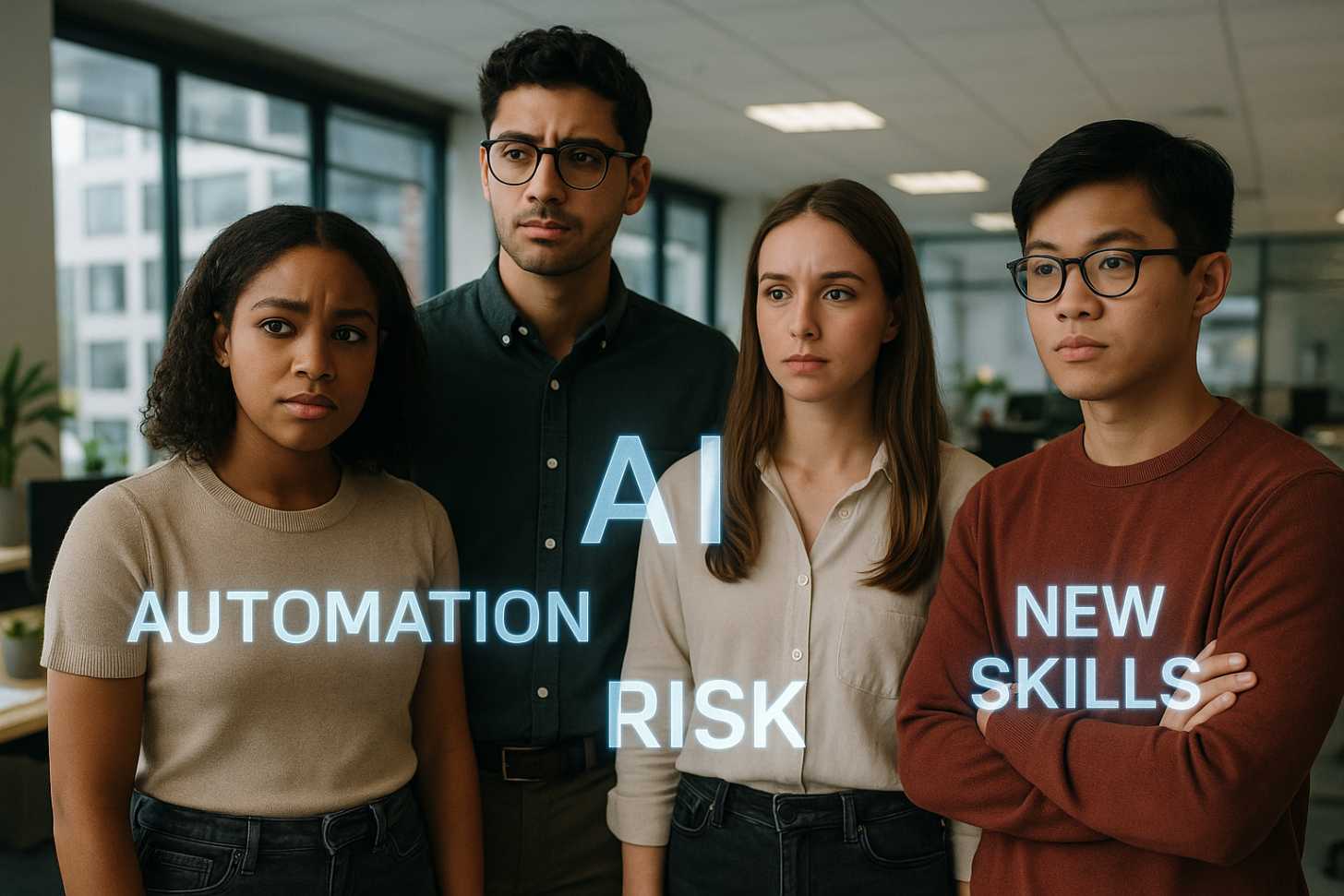
If you feel uneasy about AI and your job, you’re not imagining it.
I hear the same question everywhere, across roles, industries and countries:
“Is AI going to affect my job and what should I do about it?”
That anxiety makes sense. AI is suddenly part of everyday conversations at work, yet most of what we hear stays frustratingly abstract.
Headlines shout about disruption, replacement and transformation, but rarely does anything show what will change when it comes to daily work tasks.
This lack of job clarity leaves a gap where fear and uncertainty are starting to grow.
The good news is that there is a more practical way to think about AI’s impact on careers, and it starts by looking at tasks, not job titles.
In this article, I’ll share how to break down your role, spot which tasks AI can handle and identify the areas where you can double down on your uniquely human skills.
So you can stop worrying and start preparing.
Why AI feels so unsettling right now
Many people assume AI arrives as a single, dramatic moment: a job disappears or it doesn’t. But that’s not how change actually happens.
In reality, AI shows up gradually, inside specific tasks like:
- drafting
- analysis
- research
- administration
- pattern recognition
- coordination
When people don’t know which parts of their role are changing, uncertainty fills that gap. Some avoid looking altogether. Others feel paralysed.
For example, when we first tested GoFIGR’s AI Impact Assessment tool, I saw this fear play out in real time. In some teams, people chose not to share their results at all - not because the data was bad, but because they were scared of what it might imply.
Fear thrives in vagueness. However, practical insight reduces it.
What about our jobs are actually changing with AI?
Sure. Any assessment of AI impact is a projection, not a “prophecy”.
However, one consistent pattern keeps emerging:
AI is not “replacing jobs”. It’s reshaping the tasks inside them.
Most roles are already evolving, quietly. Not disappearing, but shifting.
In many cases, 20–30% of day-to-day work can be automated, streamlined or supported by AI; sometimes more. But the change happens inside the role’s tasks before it affects the role itself.
That doesn’t mean redundancy. It means redistribution.
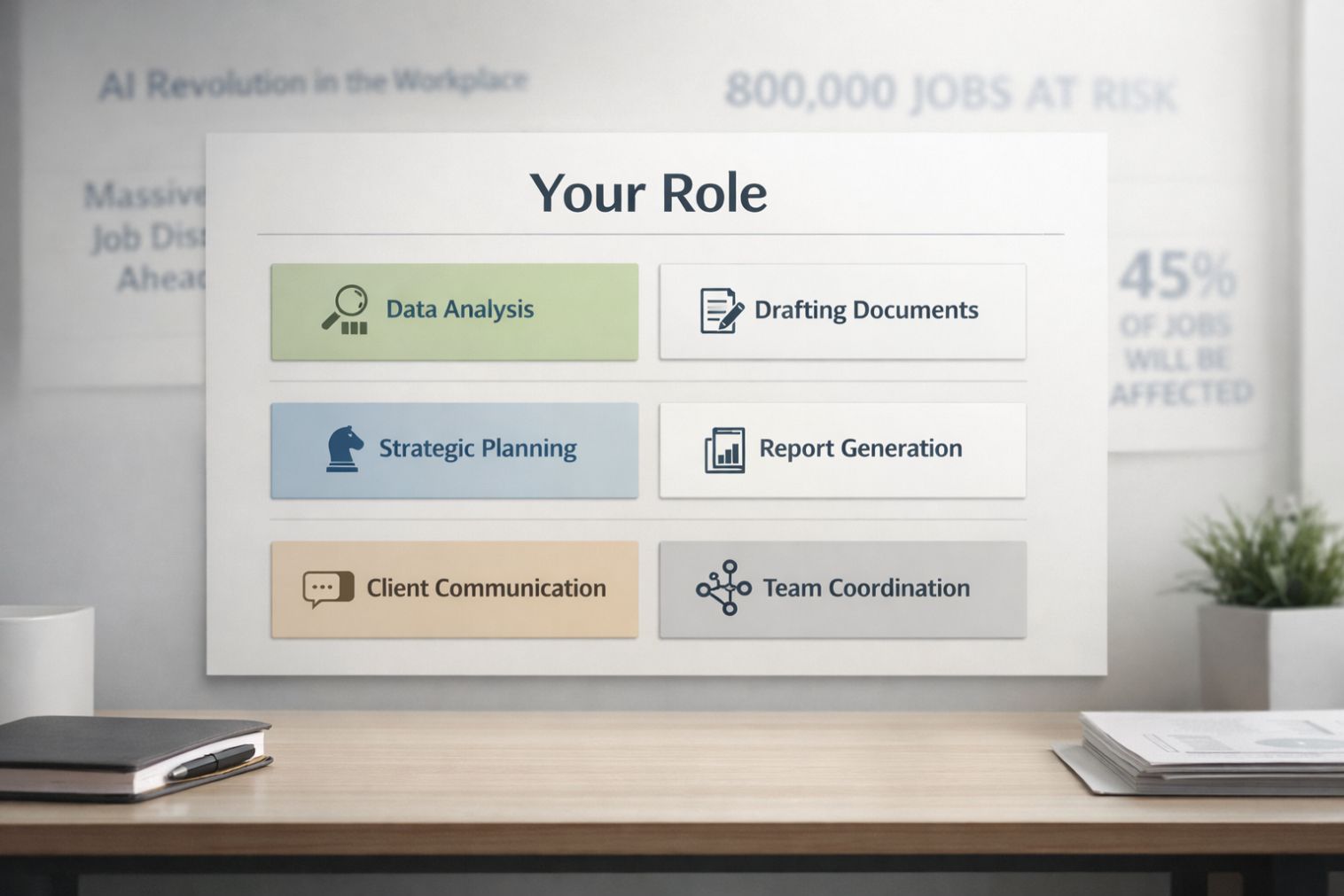
When you break work down to the task level, these categories tend to emerge:
- Tasks that remain human-led: Where judgement, creativity and nuanced decision-making matter.
- Tasks where human value actually increases: Complex thinking, relationship-building and strategy.
- Tasks AI can handle efficiently: Repeatable, structured and “today's work”.
This task-level lens changes the conversation. Instead of asking, “Will my job exist with AI?” you begin asking, “Which parts of my work are shifting with AI and how do I respond?”
That shift in perspective alone reduces a surprising amount of fear.

So, how will AI change your job?
Taking a free AI Impact Assessment does exactly that.
You input your role, responsibilities and capabilities. The assessment then generates a personalised report outlining:
- What percentage of your role is evolving
- Which tasks you’re likely to continue leading
- Which tasks AI can increasingly handle
- What this shift means for you
- Skills worth focusing on
It moves the conversation from abstract fear to something concrete - and that is powerful. When professionals see their own report, many say the same thing:
“It confirmed what I suspected.”
It gives language and structure to something they were already seeing.
Once you know what’s changing with AI, here’s what you can do
After reading the results, the most common response is: “Great. Now what?”
This is the right question.
Knowing how AI will change your job is the “what”. Preparing for it is the “how”.
Once you understand where your tasks are likely to shift, you can:
- Double down on tasks where human judgement matters most
- Start building skills that stay valuable as AI expands
- Experiment where AI safely removes friction
- Make more confident decisions about learning and career direction
This is how you future-proof your career with AI. Not by panicking. Not by ignoring it. But by making informed decisions.
Don’t let AI-job changes happen to you unexpectedly
AI isn’t a wave you can stop.
But you CAN choose whether it hits you unexpectedly or whether you see it coming and adjust your footing.
Some companies are avoiding these conversations out of fear. Others are quietly experimenting. A few are openly assessing the impact of AI and planning ahead.
As an individual, you do not need to wait.
You can start by asking:
- How is AI likely to reshape my tasks?
- What should I double down on?
- What skills should I build next?
The how – turning insight into action – is where deeper planning comes in.
That’s the broader problem GoFIGR exists to solve: helping people and organisations translate workforce insight into practical next steps. But it all starts with clarity.
Ready to replace anxiety with insight?
If you are asking, “will AI replace my job?”,
a better first step might be:
“Let me check how AI is likely to change my job.”
When you understand your work at the task level, the future becomes less abstract. You can see where:
- automation may reduce friction
- your judgement still matters deeply
- investing in new skills will make the biggest difference.
At GoFIGR, we focus on making AI’s impact practical and visible, so individuals and organisations can move from uncertainty to informed action. Instead of reacting to headlines, you gain clarity about how work is evolving and where to direct your energy next.
Because the future of work won’t reward panic or avoidance. It will reward awareness, adaptability, and early preparation.
If you’re ready to understand how AI is likely to reshape your role and use that insight to make smarter learning and career decisions, start by taking the AI Impact Assessment.
OR Contact GoFIGR today and see how we support leaders and teams navigating AI transformation.

Helena Turpin spent 20 years in talent and HR innovation where she solved people-related problems using data and technology. She left corporate life to create GoFIGR where she helps mid-sized organizations to develop and retain their people by connecting employee skills and aspirations to internal opportunities like projects, mentorship and learning.
.jpg)