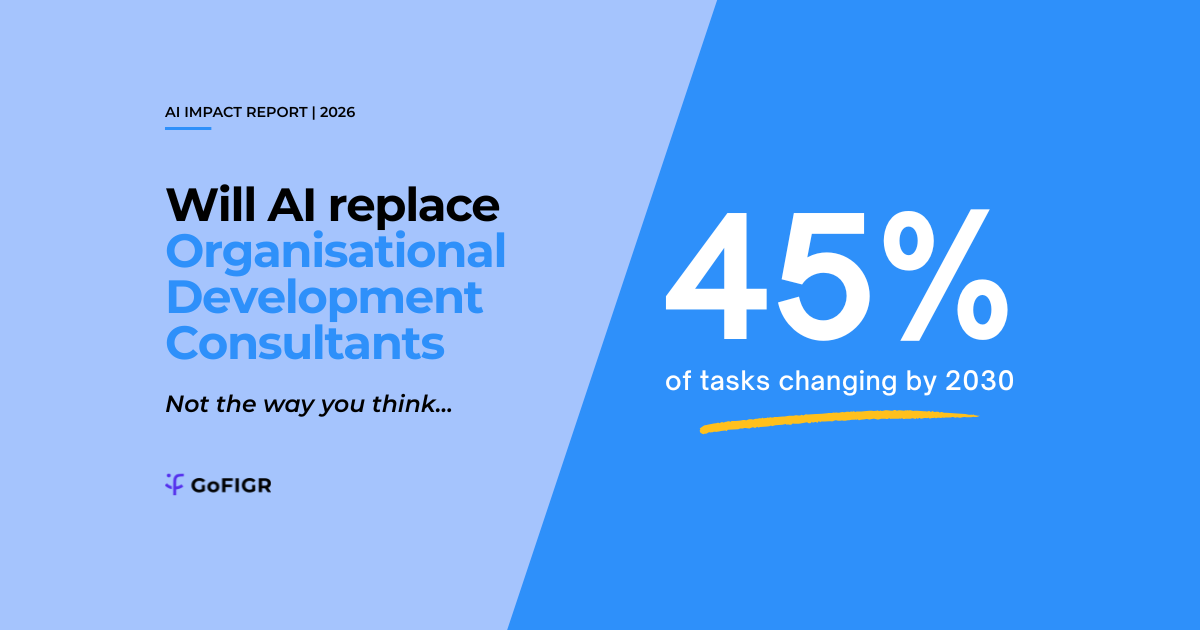
Will AI replace organisational development consultants? It's already doing the production work around the edges of the role. Survey data analysis, diagnostic report assembly, change communications drafting, and adoption tracking are being automated right now. The question isn't whether this is happening. It's which half of the job you're in.
What's already being automated
Howspace uses AI to summarise and theme input from hundreds of participants in change programmes, work that used to take a consultant days of coding by hand. Culture Amp applies AI to engagement and culture survey analysis, surfacing themes and retention risks automatically. Miro builds AI into workshop tooling, clustering ideas and generating synthesis in minutes rather than mornings.
What the research actually says
A December 2025 Gartner survey of 110 CHROs found 78% agree workflows and roles need to change to get the most out of AI investments, and just over half of organisations redesigned roles because of AI in the past year alone. A separate July 2025 Gartner survey of 313 senior leaders found organisations that continuously adapt change plans based on employee response are four times more likely to achieve change success. McKinsey's State of AI research adds the scale: 88% of organisations now use AI regularly in at least one function. Change is no longer a project. It's the operating condition.
AI has turned change management from a project discipline into a permanent condition. That's terrible news for methodology sellers and excellent news for consultants who can sit with an anxious leadership team and tell them the truth.
Two people. Same title. Completely different week.
Organisational Development Consultant A spends the week producing. Coding survey comments, assembling the diagnostic deck, drafting the change comms cascade, updating the adoption dashboard. AI now handles each of those faster and cheaper, and clients are noticing what they used to pay day rates for.
Organisational Development Consultant B spends the week in the difficult rooms. Diagnosing why a transformation is stalling from the interviews the data can't capture, coaching an executive who is quietly blocking the change, facilitating the session where two functions negotiate who owns the new AI-augmented process. That work has no API.
So here's the move. Let AI produce the artifacts and reposition yourself around the conversations. Build a specific, demonstrable capability in redesigning work around people and AI together, because that's the change programme every client is about to run, and it barely existed as a specialism three years ago. The consultants who can do it are about to be very busy.