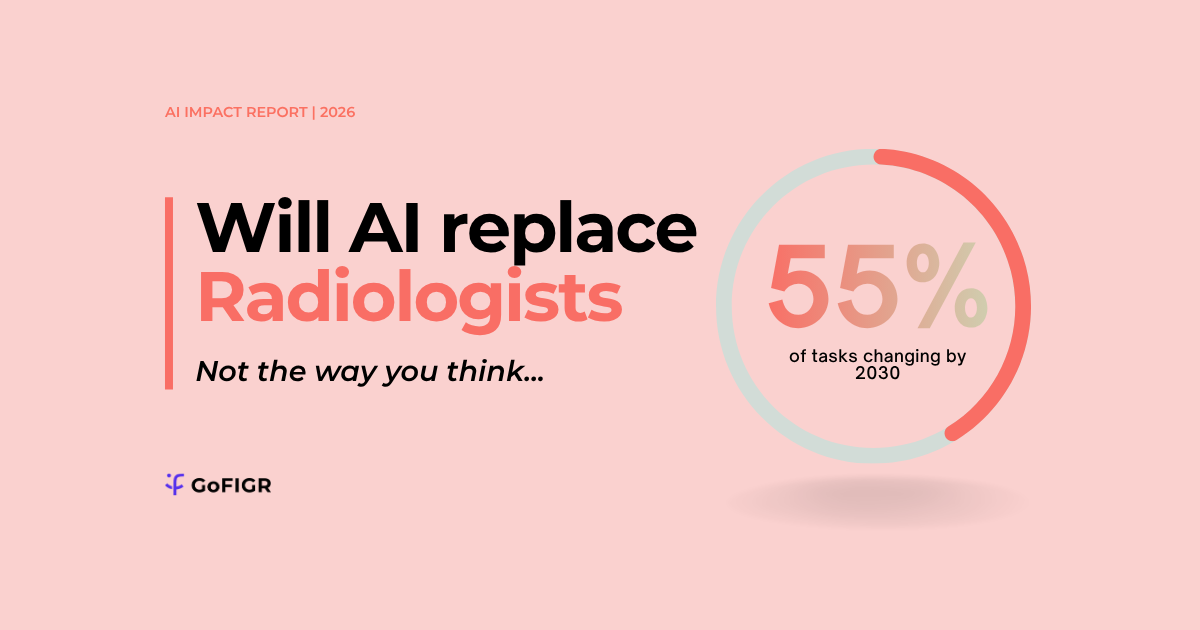
Radiology is the most heavily targeted medical specialty for AI in the world - 76% of all FDA-cleared medical AI applications are aimed at imaging. That's not a future trend. It's already inside hospital workflows through triage tools, report-drafting assistants, and automated measurement platforms. The question for radiologists isn't whether AI is changing the job. It's how much of your current workload sits in the part that AI does well versus the part it genuinely can't touch.
What's already being automated
Aidoc integrates directly into PACS systems and automatically triages incoming scans for critical findings - its January 2026 FDA-cleared foundation model can flag 14 critical conditions from a single abdominal CT with 97% mean sensitivity.
Nuance PowerScribe (Microsoft) is used by over 80% of radiologists and now includes AI-powered impression drafting and report generation - it handles the reporting workload the way a trainee would, while preserving radiologist sign-off.
Viz.ai uses AI to detect stroke and other acute conditions from imaging, automatically alerting care teams and shortening treatment windows - one trauma network reported a drop in 30-day brain haemorrhage mortality after deployment.
What the research actually says
Published research identifies AI-assisted report drafting as delivering a 15% productivity increase for radiography, and Philips' 2025 Future Health Index found 85% of radiologists believe AI will improve consistency in patient examinations. The UK projects a 40% consultant shortage by 2028 -the AI productivity case isn't about job replacement, it's about handling a demand curve that radiologist supply cannot meet alone.
Radiology is not at risk of being replaced by AI. It's at risk of being permanently split between radiologists who use AI to take on more complex work and those who spend their careers reviewing AI outputs without developing the clinical judgment that makes that review meaningful.
Two people. Same title. Completely different week.
Radiologist A works through a high-volume worklist of routine scans - chest X-rays, standard CTs, repeat imaging for chronic conditions. AI triages the queue, flags the urgent cases, and drafts the reports. They review and sign. It's efficient, but the skill development curve has flattened. The volume is absorbed; the complexity isn't growing.
Radiologist B handles the cases that AI escalated and the complex imaging where clinical context matters. They're doing more multidisciplinary consultations, image-guided interventions, and subspecialty reads where ambiguity requires genuine diagnostic reasoning. The AI handles the routine. They handle everything the AI isn't confident about - which is where the most interesting medicine lives.
The practical move is to get fluent with the AI tools already in your hospital's workflow. Not because the tools are perfect - they aren't - but because knowing exactly where they fail is the most valuable clinical skill a radiologist can build right now. The radiologists who understand AI's edge cases will be the ones trusted to sign off on the outputs that matter most.