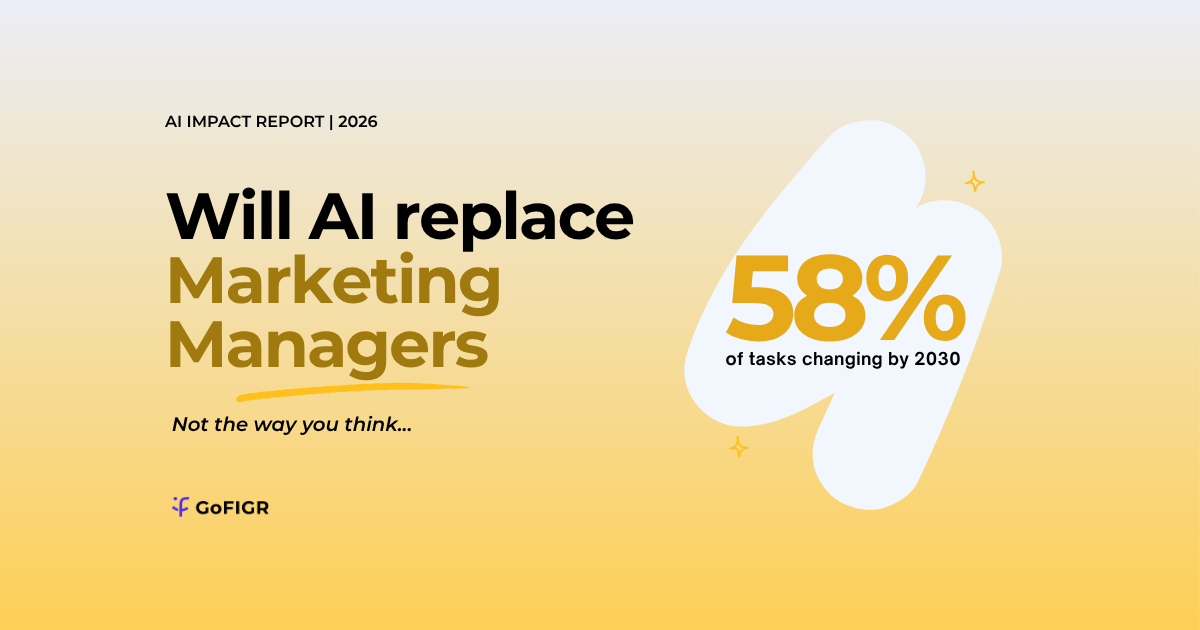
Marketing managers are watching AI absorb a significant chunk of what used to justify a full working week. Content drafts, performance reports, A/B test setups, audience segmentation - these are being handled faster and more cheaply by tools that don't need a brief to get started. It's not whether this is happening. It's which half of the job you're growing toward.
What's already being automated
Jasper generates on-brand blog posts, ad copy, social captions, and email sequences using brand-trained AI models - built specifically for high-volume content production across marketing teams.
HubSpot Breeze embeds AI across email marketing, lead scoring, content creation, and campaign analytics - particularly useful for teams already operating inside the HubSpot ecosystem.
Persado uses AI to generate and test marketing language based on emotional triggers, producing copy variants that are optimised for conversion at enterprise scale.
What the research actually says
HubSpot's AI Trends 2026 report finds the average marketer now recovers 6.1 hours per week through AI assistance, with senior practitioners saving closer to 8-10 hours. McKinsey estimates generative AI can lift marketing productivity by 5-15%. The productivity gains are clearest in content creation and audience research - and least visible in video production, which still carries high human overhead.
The marketing manager role isn't shrinking. It's splitting. Strategy, brand judgment, and creative direction are expanding. Execution-heavy content work and performance reporting are compressing. The gap between those two versions of the job is widening every quarter.
Two people. Same title. Completely different week.
Marketing Manager A spends their week writing first-draft copy, pulling performance reports, scheduling social posts, and building email sequences. These are real skills. They're also exactly what Jasper, HubSpot Breeze, and a well-trained AI workflow can do in a fraction of the time. The floor is dropping under that version of the role.
Marketing Manager B spends their week interpreting performance data to make channel decisions, working with product teams to sharpen positioning, managing agency relationships, and setting creative direction. They use AI to get the drafts and reports faster. But the judgment about what to do with those outputs stays with them. That's the version of the job that's growing in value.
The specific move to make is away from execution and toward interpretation. Use AI to produce the first draft, the report, the segmentation - then add the judgment layer that the tool can't. If you're still spending most of your week on the tasks an AI does well, that's the honest signal to act on.