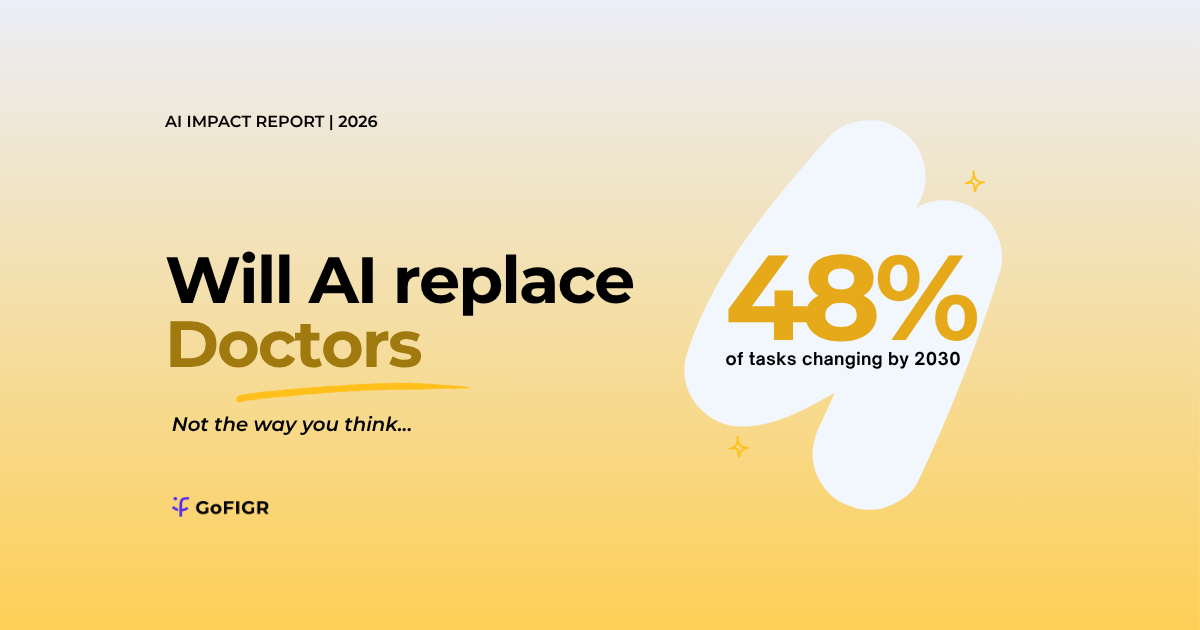
AI is already in the clinic. It's writing clinical notes from conversations, reading imaging faster than radiologists, and flagging drug interactions before the prescription is signed. The question isn't whether this is happening. It's which half of the job you're in.
What's already being automated
Nuance DAX Copilot is Microsoft's ambient clinical intelligence platform, deployed across major health systems. It listens to physician-patient conversations and generates complete clinical notes in the physician's own style, integrating directly with Epic and Oracle Health.
Abridge converts real-time clinical conversations into structured medical documentation and is deployed across large Epic-based health systems. A CHRISTUS Health pilot reported a 78% reduction in clinician cognitive load following deployment, and Abridge earned Best in KLAS for Ambient AI in both 2025 and 2026.
Suki AI is a voice-driven clinical assistant used in independent practices and outpatient settings, handling note drafting, coding suggestions, and follow-up task generation from spoken clinical interactions.
What the research actually says
The AMA's 2026 Physician Survey found 81% of doctors now use AI professionally, up from 38% in 2023. Three-quarters of physician AI users report it has already reduced administrative workload and improved job satisfaction. Platforms like Nuance DAX and Abridge report saving clinicians 1 to 2 hours of documentation time per day, and a 2025 study of 263 physicians found burnout rates dropped from 51.9% to 38.8% after just 30 days of AI scribe use.
The doctor-patient relationship doesn't fit in a flowsheet. That's exactly why AI is targeting the flowsheet and leaving the relationship alone. For now, at least, the judgment and the human connection are still yours to own.
Two people. Same title. Completely different week.
Doctor A sees patients and then spends the equivalent time, sometimes more, on documentation. Notes after clinic. Referral letters at home. Inbox triage before morning rounds. The work is real and the care is good. But the ratio of patient contact to administrative output is unsustainable. This is where burnout begins.
Doctor B uses AI tools to compress the documentation layer. Notes draft themselves from conversations. Imaging reads come pre-flagged. Literature searches take minutes, not an evening. The time reclaimed goes back to patients: longer consultations, complex cases, teaching, and the parts of medicine that drew them to the profession in the first place.
If you haven't started using an AI documentation tool, start this week. Pick one that integrates with your EHR and run it alongside your existing workflow for a month. The doctors who delay are not staying neutral. They're falling behind peers who are already reclaiming hours per day and redirecting them toward patient care and professional development.