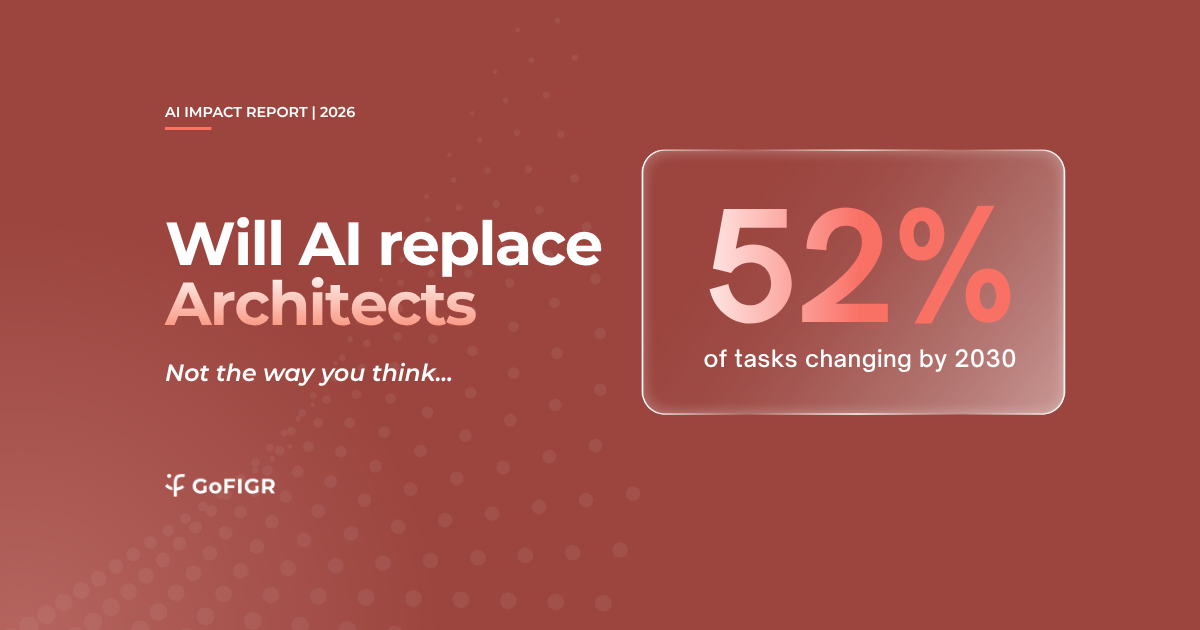
AI has arrived in architecture practices, and it's not waiting at the door. Rendering, massing analysis, code checking, and documentation are all being touched. The architects who understand exactly which tasks are shifting, and which ones still require a licensed professional's judgment, are the ones who'll define what the role looks like by 2030.
What's already being automated
Autodesk Forma Site Design (formerly Spacemaker) is a cloud-based AI platform for early-stage site and massing design that analyses sun, wind, noise, and zoning constraints to generate optimised building layouts in minutes rather than weeks. Midjourney has become a standard concept visualisation tool in practices of all sizes, generating photorealistic architectural renderings from text prompts in seconds and cutting visualisation prep time from hours to under ten minutes. Snaptrude uses AI agents to take project briefs from text prompt or RFP upload through to presentation-ready schematic designs, compressing the early design pipeline significantly for residential and commercial projects.
What the research actually says
A 2025 survey by Architizer and Chaos found that 46% of architecture professionals already use AI tools in their visual workflow, with excitement around AI experimentation up 20% compared to the prior year. AI-assisted rendering has reduced generation time from two to four hours to under ten minutes, according to the Autodesk State of Design and Make Report 2024. Separately, research from Monograph found that 84% of architects see AI as augmenting their work, not replacing it, though that view is increasingly tested as automation moves up the design chain.
The firms pulling ahead aren't using AI to replace design thinking. They're using it to do less of the work that doesn't require design thinking, and more of the work that does.
Two people. Same title. Completely different week.
Architect A spends most of their time producing renderings for client meetings, drawing up construction documentation, performing code compliance checks, running energy performance calculations, and revising massing models based on client feedback. These are all tasks that AI tools are now handling faster and at lower cost. The time savings are real. Whether that time gets reinvested or absorbed by the practice is the real question.
Architect B spends their week in client strategy sessions, navigating planning authorities, making design decisions that balance aesthetics with structural realities and community context, and managing the professional liability that comes with every stamp they put on a drawing. AI tools support this work, but they don't do it. Judgment, accountability, and client trust aren't automatable.
The architects building Architect B's profile right now, regardless of where they sit in a firm, are the ones making the right investment.