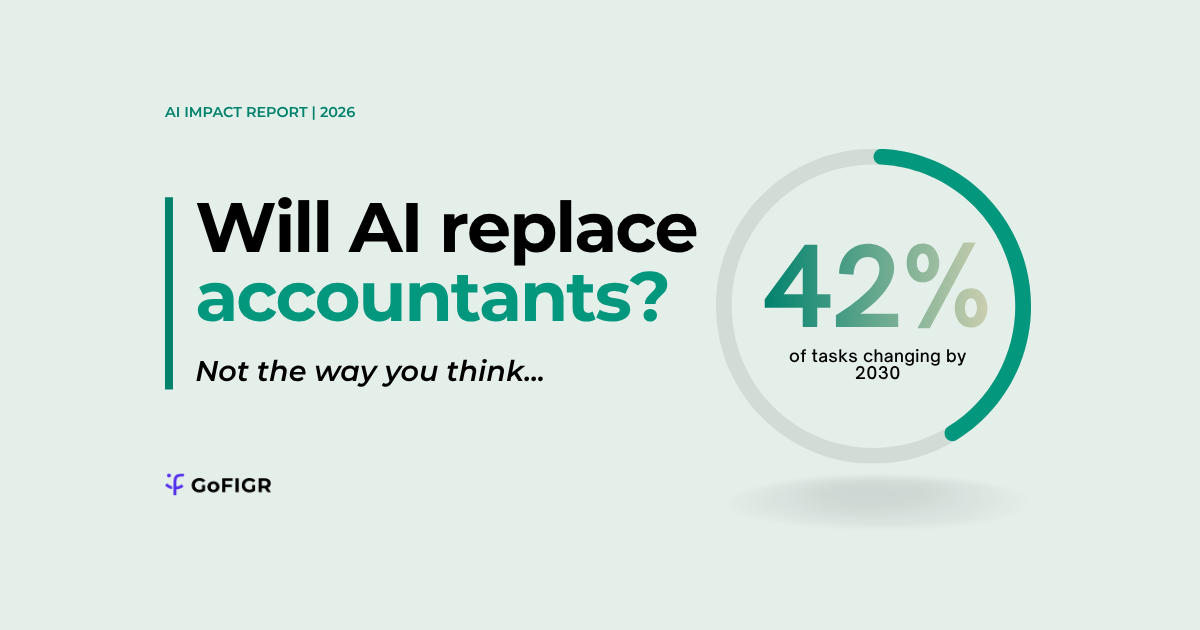
AI won't replace all accountants, but it's already replacing some of what they do. Data entry, invoice processing, transaction categorisation, and month-end reconciliation are being automated right now by tools already in production at accounting firms. The question isn't whether this is happening. It's which parts of your specific job are changing, and how fast.
What's already being automated
This isn't theoretical. These tools exist today and firms are using them.
Invoice processing and accounts payable: Vic.ai claims a 355% improvement in invoice processing productivity, reading invoices, coding transactions, routing approvals, and learning vendor patterns over time. Bill uses OCR to extract supplier invoice data and push it straight into your accounting system.
Month-end close: FloQast lets accountants build auditable workflows to automate accruals, journal entries, and reconciliations. Numeric pulls transaction-level data every minute for real-time reconciliation and AI-written variance explanations.
Fraud detection: MindBridge uses machine learning to analyse 100% of transactions in real time, flagging anomalies a sample-based audit would miss.
What the research actually says
The most rigorous study on AI in accounting comes from Stanford and MIT, published in 2025. Researchers analysed hundreds of thousands of transactions from 79 firms and surveyed 277 accountants.
The finding that matters most: experience determines how much you benefit. Senior accountants treated AI as a collaborator. Junior accountants were more likely to accept AI outputs at face value. Senior accountants saw bigger gains. Junior accountants saw smaller gains and more errors.
AI rewards the accountants who bring judgment, and exposes the ones who were only ever processing.